2025 TV Key Facts
November 7th, 2025
Reading time 2 min.

Nation brands

Author

Greg Clayton

UK Head of Brand Growth
Ipsos

How to thrive in an age of slobalisation

We are in an era of national populism where eroding trust in global institutions has sparked “slobalisation” – the slowdown or partial reversal of globalism –where nations, societies, brands, and individuals react by embracing more local cultures and systems. This creates a paradox for “Nation Brands” (those closely associated with the identity of their country of origin) which serve to build trust domestically, but risk losing it further afield. This article explores how brands can navigate this fractured landscape by anchoring in their unique national identity while hyperlocalising for global markets, turning authenticity into their most powerful asset in a world where consumers are increasingly sceptical.

How we perceive our nations

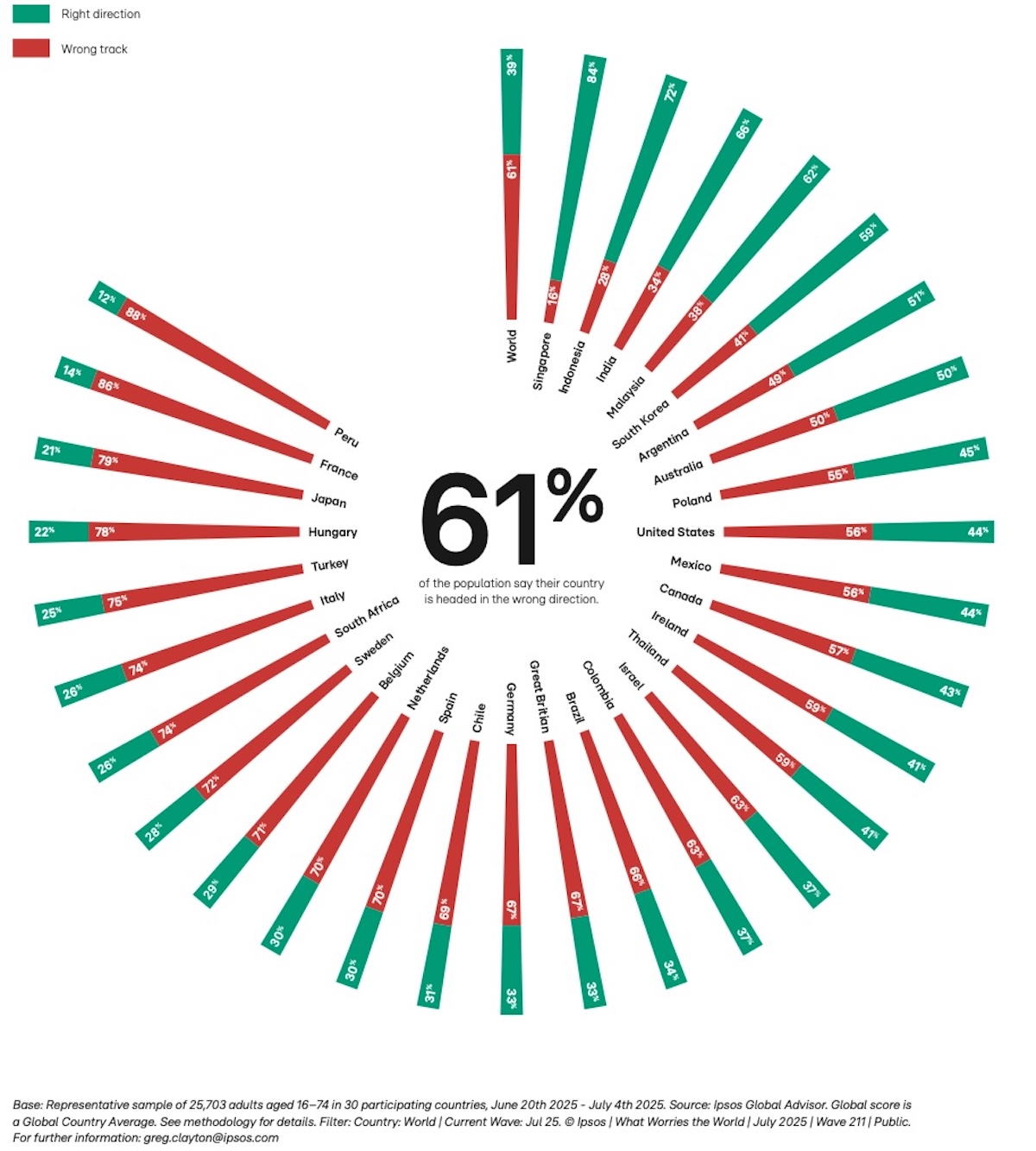
This recent strain of populism has its roots in the 2008 economic crisis and its first significant moment was the 2016 Brexit vote. Since then, it has been amplified by a rampant cost-of-living crisis, fervent anti-immigration rhetoric, and widespread media disinformation. Slobalism, as a reaction against globalism, is being fuelled by widespread dissatisfaction with the direction of the nation itself – large majorities believe that their nation is going in the wrong direction as shown below. A pessimistic population is more likely to value familiar, national symbols and customs over foreign influences – the very essence of slobalism.Consequently, it is little wonder that global public sentiment is gloomy and trust in media, politicians, and wider institutions is being challenged.
 

Would you say things in your country are heading in the right direction, or are they off on the wrong track? (July 2025)

Trust remains a key issue

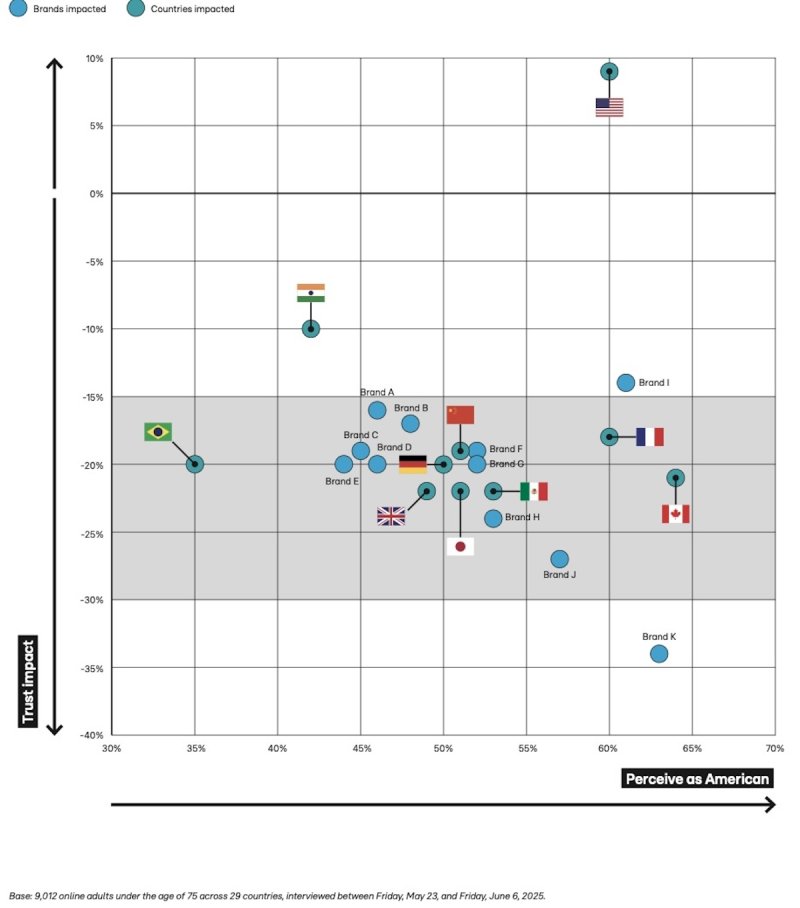
Even seemingly untouchable institutions are not immune from these controversies. The recent challenges of “Brand America” are heavily impacting its brands – amongst global consumers, there are significant trust drops (15–30 per cent) for brands perceived as “American”, as opposed to “International”. Amongst the domestic US audience however, American associations continue to drive up trust (+9 per cent). This paradox represents the era of national populism in microcosm. Close ties to the identity of your home nation can boost domestic trust but harm international perception, depending on geopolitical and cultural sentiment.

trust drops for brands perceived as “American” as opposed to “International”.
15-30%

Impact of being perceived as American on trust and purchase: cross-country average

When done right

The first step is for “Nation Brands” to leverage the positive associations their country uniquely owns. Think of the German reputation for precision and technological prowess that has defined brands like Mercedes, or the French association with grace and elegance that has powered Chanel. Similarly British tradition, wit, and endurance have shaped Cadbury, Marmite, and others. Drawing from this rich national heritage provides a powerful, authentic brand anchor. Secondly – whilst retaining those core strengths, it is vital to localise in export markets. Consumer proximity is critical – just consider how McDonald’s adapts menu items, food provenance, and tone of voice to local markets, whilst maintaining its core global identity. This blend of consistent values and local adaptation will continue to help brands thrive in a fragmenting world. And finally – brands cannot over-react to fleeting challenges – they have weathered socio-economic crises before, and they will again. Consistent adherence to a strong and authentic brand identity, whether rooted in a national culture or not, is what stands the test of time.


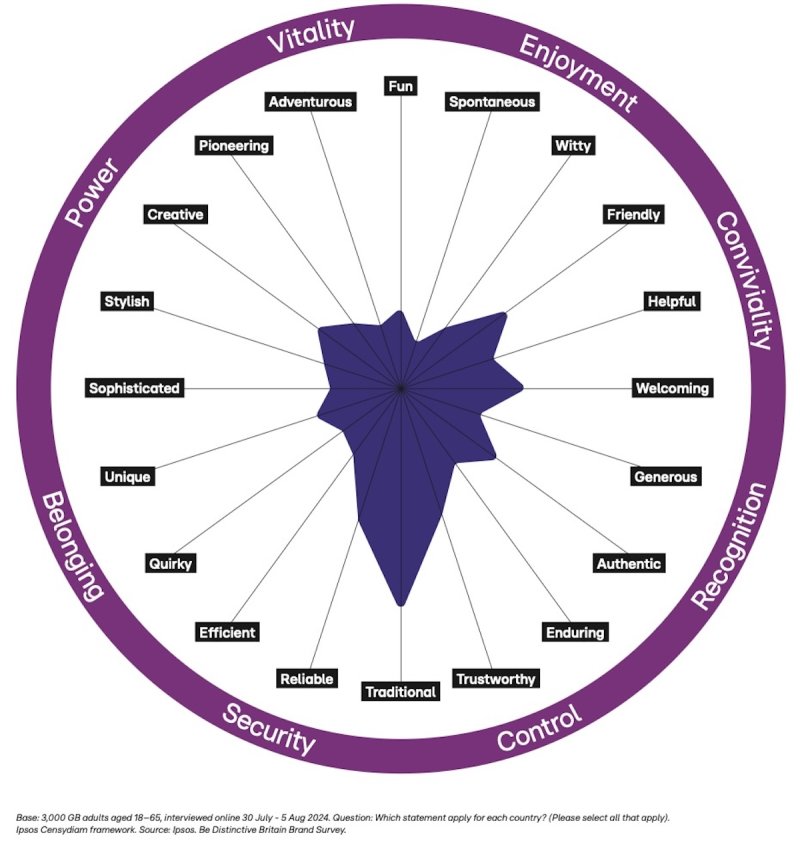
Breaking down Great Britain's personality profile

About Ipsos

Ipsos is a global leader in market research and insights, specialising in understanding consumer behaviour, brand performance,and social trends.