Unwavering strength of Total Video

Author

Malte Hildebrandt
Managing Director,
Screenforce
Total Video remains essential for advertisers – delivering reach, brand impact, and sales. Big brands rely on it, and newcomers are joining. In a streaming age, TV meets core human needs with trusted, curated content. As entertainment, it lifts mood and simplifies choices – making it truly indispensable.
What are the major updates in Germany’s TV and advertising market this year?
We are currently experiencing a phase of consolidation and collaborations in the German TV and advertising market: RTL Group is acquiring Sky’s businesses in Germany, Austria, and Switzerland. Warner Bros Discovery and EL CARTEL plan to combine their TV marketing operations starting in 2026. Furthermore, the TV companies and marketers within the Screenforce network have entered various content and sales collaborations to strengthen their business. What remains unchanged is the strength of TV and Total Video as advertising media.
TV is indispensable for advertisers when it comes to quickly building high reach, anchoring brands in people’s minds, and driving sales. Big brands value the strengths of TV. It is also encouraging that many companies are using TV advertising for the first time, including Aperol, Greenforce, and Roadsurfer, or are returning to television after a break, such as the cult brands Berentzen, Exquisa, and Golden Toast.
Can you elaborate on the research presented?
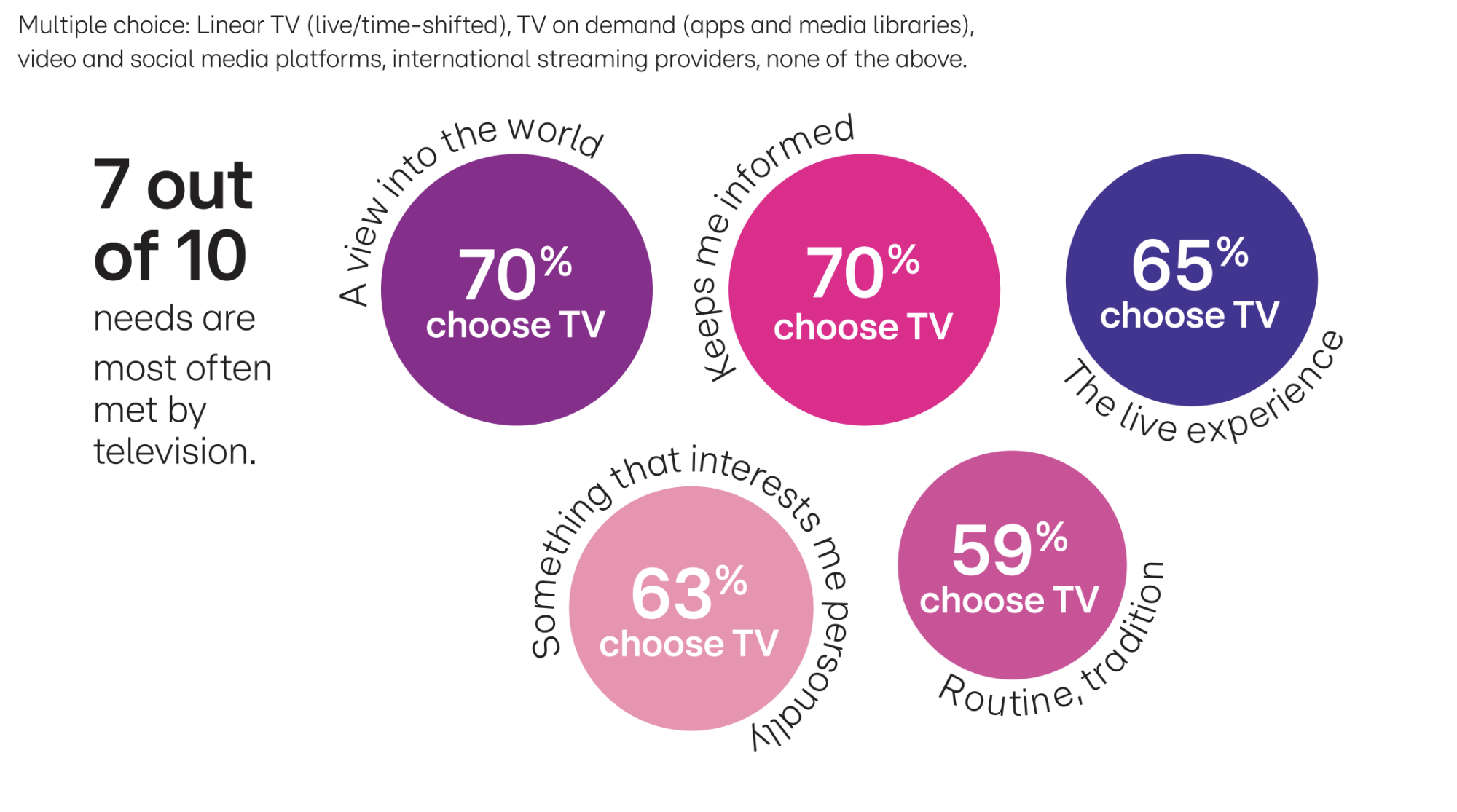
Research is the foundation of Screenforce’s work. A recent example – the study “The Beauty of TV” – shows that many prejudices about television do notstand up to reality. What surprised me most was that the majority of Germans do not share these prejudices. Even in the streaming age, TV fulfils many basic human needs that no other channel can – offering a glimpse into the world, keeping up to date, or the live experience, as well as routines and traditions. Viewers value editorially curated content, and television is a reliable source of information. Last but not least, television relieves the burden of decision-making and puts people in a good mood. As an entertainment medium, it is simply indispensable for many.
What will your company be doing next year, are there any big projects to look out for?
We have joined the 50+ initiative developed by the rheingold salon research institute, with advertising partners Procter & Gamble, and Gerolsteiner Brunnen. More partners will follow. At the heart of the initiative is the study “50+ and the End?” which dispels prejudices about people in their fifties – an age that is as far removed from 80 as it is from 20. This important group of consumers – with strong purchasing power – is often represented in advertising in a clichéd way, if at all, and feels misplaced. The study shows how to successfully engage with people over 50, and find new narratives. This opens up completely new perspectives for media planning and creation.
The Beauty of TV
“TV is dead.” “Who watches TV these days?” – Who is not familiar with these common prejudices about television? But do they really reflect the attitudes of the general population? The new study “The Beauty of TV,” conducted by market research institute Delphi, provides a reality check.
An in-depth online survey of 1,500 participants from the DACH region shows that these – and other prejudices such as “only for older people,” “trash TV,” or “it is just commercials” – do not reflect the views of the general population. Only 32 per cent of respondents consider television to be socially irrelevant. Although familiar prejudices are more pronounced among younger people, television remains firmly anchored in this target group. TV fulfills central functions in the everyday lives of many people: it informs, provides orientation, creates live experiences, structures the day – and delivers reliably curated content.
Strengths of TV: fulfilling needs
TV drives the strongest ad recall
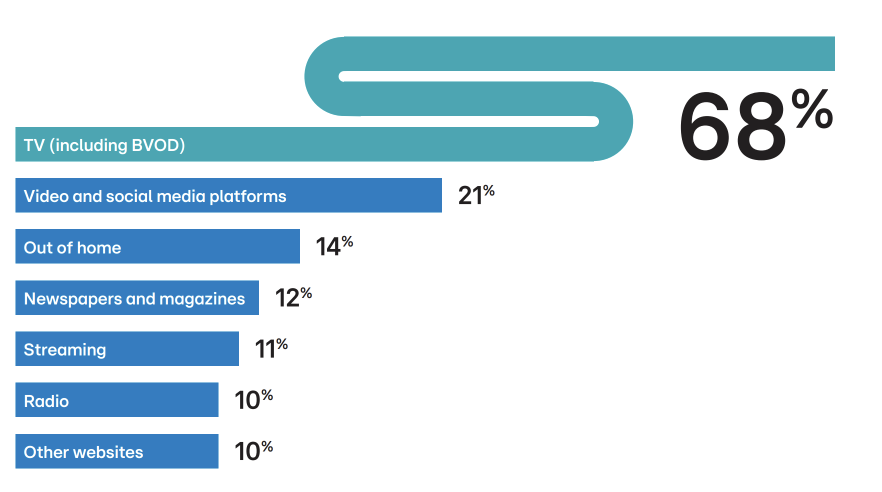
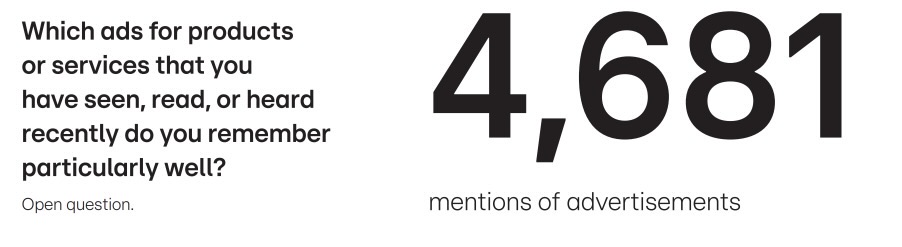
TV also remains strong in terms of advertising impact: the advertising that respondents spontaneously remember was most frequently seen on television – a finding previously confirmed by numerous national and international studies, and is now supported by our research.When asked, “Which advertisements for products or services that you have seen, read, or heard recently do you remember particularly well – and where did you see or hear these advertisements?” more than 4,600 brand names were mentioned. Best of all, 68 per cent had seen advertisements for these brands on TV. Video and social media platforms followed far behind, at just 21 per cent. This ranking illustrates once again that while preconceptions may persist, the reality is different – and people still appreciate the true beauty of TV.
And where did you see or hear these advertisements? Multiple answers.